
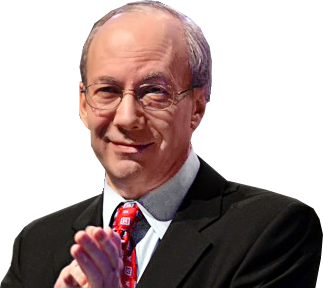
Rabbi Eric Yoffie, A Voice of Progressive Faith and Interfaith Bridge‑Building
Rabbi Eric H. Yoffie has spent more than four decades at the center of American Jewish life, emerging as one of the country’s most influential liberal religious leaders. As President Emeritus of the Union for Reform Judaism, he led the largest Jewish denomination in North America from 1996 to 2012, guiding it through a period of demographic change, spiritual reawakening, and intense public debate over religion’s role in civic life.
A writer, lecturer, and frequent commentator on matters of faith and public affairs, Rabbi Yoffie has long been a prominent voice in national conversations about Israel, interfaith relations, and the evolving character of American religious identity. His essays appear regularly in publications such as The Huffington Post, The Jerusalem Post, and Haaretz, and he has been a guest on major news networks including CNN and Fox News. He has addressed audiences at the World Economic Forum in Davos and is widely quoted in both the Jewish and general press.
Early Life and Rise in Reform Judaism
Raised in Worcester, Massachusetts, Yoffie grew up at Temple Emanuel and became active in the North American Federation of Temple Youth, eventually serving as a regional president and later a national vice president. After attending Stanford University and graduating from Brandeis, he received rabbinic ordination from Hebrew Union College in 1974.
He served congregations in New York and North Carolina before joining the Union for Reform Judaism in 1980. Over the next decade, he held a series of leadership roles, including director of the Midwest Council, executive director of the Association of Reform Zionists of America, and vice president of the URJ. He also served as executive editor of Reform Judaism magazine. In 1996, he succeeded Rabbi Alexander Schindler as president of the URJ, becoming the movement’s leading public voice.
A Champion of Spiritual Depth in Liberal Judaism
Throughout his presidency, Rabbi Yoffie urged Reform Jews to deepen their engagement with Jewish text, prayer, and tradition. He launched two major worship initiatives—one in 1999 to help congregations become “houses in which we pray with joy,” and another eight years later encouraging renewed Shabbat observance and reimagined Shabbat morning worship. He promoted adult Jewish literacy and introduced the Sacred Choices curriculum, which brought discussions of sexual ethics into Reform camps and congregations.
In his writings, he has argued that a religiously grounded Judaism—rather than a purely cultural one—is essential to the community’s future. His progressive theology, rooted in biblical text and moral tradition, has shaped his commentary on topics ranging from sin and atheism to immigration, health care, and economic justice.
Interfaith Leadership and Historic Firsts
Rabbi Yoffie is widely regarded as a pioneer in interfaith engagement. He was the first rabbi to address Liberty University’s convocation, the first major Jewish leader to speak at the Islamic Society of North America’s convention, and the first Jew to address the Churchwide Assembly of the Evangelical Lutheran Church in America. His speeches often emphasized shared values while confronting difficult differences, including church‑state separation and LGBTQ+ rights.
He has consistently called for deeper understanding between Jews, Christians, and Muslims, urging communities to educate one another and challenge stereotypes. His advocacy extended to defending the rights of Muslim Americans and supporting projects such as Park51.
A Moral Voice on Social Justice
Social justice has been a defining theme of Yoffie’s public life. He opposed the death penalty, championed LGBTQ+ equality, and became one of the country’s most prominent religious advocates for gun control. At the Million Mom March in Washington, he delivered one of the event’s most memorable addresses, condemning what he described as a “gun‑flooded society” and calling the worship of weapons a form of modern idolatry.
A Lifelong Commitment to Israel
Rabbi Yoffie has been a central figure in shaping American Jewish attitudes toward Israel. For more than 30 years, he met regularly with Israeli leaders, advocating for religious pluralism and the rights of non‑Orthodox Jews. He played a key role in the founding of the Israel Religious Action Center, now the leading voice for religious freedom in the Jewish state.
His insistence on dignity and recognition for Reform rabbis occasionally brought him into conflict with Israeli officials. In 2006, he declined to meet with President Moshe Katsav after Katsav refused to address him by his title. Years later, he publicly questioned whether presidential candidate Reuven Rivlin would acknowledge Reform rabbis with the same respect.
A Continuing Public Presence
Since stepping down from the URJ in 2012, Rabbi Yoffie has remained an active lecturer and commentator, speaking at universities, congregations, and civic forums on topics including Israel, American religious life, and the challenges of interfaith dialogue. His talks are known for their clarity, moral conviction, and willingness to confront difficult questions.
He lives in Westfield, New Jersey, with his wife, Amy Jacobson Yoffie. The couple has two children.
A Legacy of Thoughtful, Courageous Leadership
Across his career, Rabbi Eric Yoffie has stood out for his ability to bridge communities, articulate a progressive religious vision, and speak with moral urgency on issues of national consequence. Whether addressing worship practices within Reform Judaism or the complexities of Middle East politics, he has consistently urged Americans—of all faiths and of none—to approach public life with humility, curiosity, and a commitment to justice.
Compiled by Microsoft Copilot from material supplied by Jerry Morse.