Our next Zoom Reunion
Monday
June 8, 2026
7:00 PM
email: benbachrach@gmail.com if you want the Zoom login information.

Our next Zoom Reunion
Monday
June 8, 2026
7:00 PM
email: benbachrach@gmail.com if you want the Zoom login information.
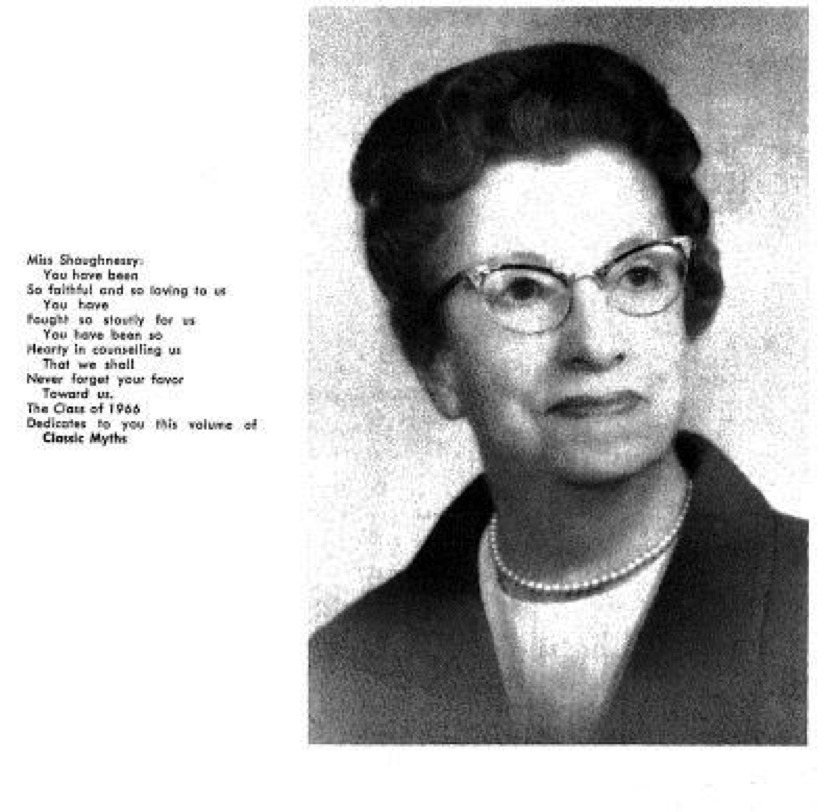
Jerry Morse suggested that we add this to our website, a 2015 article about Miss Shaughnessy that is posted at:
http://theworcesterjournal.com/2015/04/03/2015324anna-shaughnessy-maker-of-writers/
There were other novelists not mentioned in the article that were influenced by Miss Shaughnessy. Noah Gordon (Noah Mandell’s cousin) had at least 5 novels published. The first was published during our senior year at Classical. If you know of others, please notify benbachrach@gmail.com.
Anna Shaughnessy, Maker of Writers
by Edmund Schofield
Worcester Journal Editor’s Note: As a rule, we don’t publish work by older, established writers, but we make an exception with this piece by the late Edmund Schofield since it tells the story of an English teacher who had the rare ability both to instruct and inspire. Anna Shaugnessy mentored young writers who went on to great success–Stanley Kunitz, MIlton Meltzer, Charles Olson, and Nicholas Gage. Every young writer should be lucky enough to come across an Anna Shaughnessy.
We learned about this piece through Joan Gage, who featured it in her blog, A Rolling Crone. We are grateful to be able to publish this edited version of the essay in the Journal.
There is a further twist to the tale. Schofield’s original essay described three writers mentored by Miss Shaugnessy, and only at the last minute did he discover that Nicholas Gage, Joan’s husband and an accomplished author whose books include “Eleni,” which was made into a successful movie of the same name, and “A Place For Us,” had also been a student of hers. Gage’s thoughts on his old high school teacher are in a postscript to the essay.
continued at:
from Jerry Morse
Every time I watch the University of Oklahoma play football, I wonder where they got the music for their fight song Boomer Sooner. The music happens to be identical to the music for our much beloved Salitube. So I looked it up.
“Boomer Sooner” is the fight song for the University of Oklahoma (OU). The lyrics were written in 1905 by Arthur M. Alden, an OU student and son of a local jeweler in Norman. The tune is taken from “Boola Boola“, the fight song of Yale University (which was itself borrowed from an 1898 song called “La Hoola Boola” by Robert Allen (Bob) Cole and Billy Johnson.
While Boola Boola is till much loved at Yale, it is no longer the official fight song.
Jerry
Joseph Doyle Ortman
April 28, 1947 ~ March 4, 2016
Carmel Valley, CA
Joseph Doyle Ortman died March 4, 2016 and leaves behind son Amakua, 2 sisters Nancy and Joann, soulmate Mary O’Neil and many dear friends. During his life Joseph had several leather shops, was an EMT and Firefighter in Carmel Valley Village. He also performed with the Jamesberg Players and traveled the world. Joseph played his flute for the Carmel Mission, Diocesan Choir, Our Lady of Mount Carmel for many years, and he played his flute in all 21 California missions. We love and miss you.
Memorial Mass is scheduled for March 19th, 2016, at 1pm at Our Lady of Mount Carmel Catholic Church, 9 El Caminito Rd., Carmel Valley.
17th President of Hamilton College
Presented: March 4, 2008, by Dan Chambliss, Professor of Sociology
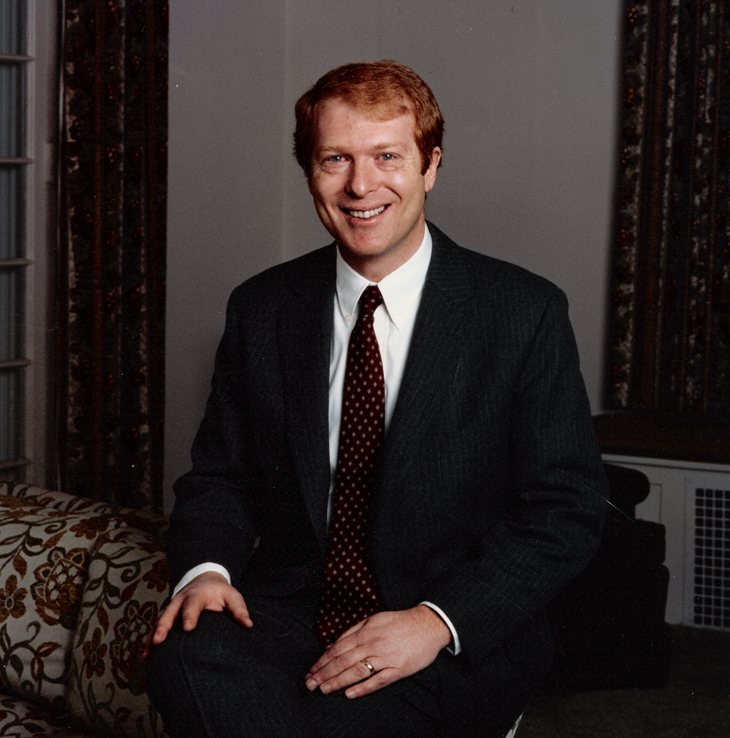
Harry C. Payne, president emeritus of Hamilton College, was born on March 25, 1947, and died unexpectedly on January 7, 2008, at the age of 60. A remarkably accomplished historian and academic leader, he served as president or acting president of three distinguished liberal arts colleges and the nation’s largest independent school, yet he always remained completely unpretentious.
As a teenager, Hank dreamed of becoming a diplomat, but when Princeton and its Woodrow Wilson School turned him down, he attended Yale instead, where he “fell in love with school;” he revered his teachers there as everywhere, and could recite the names of nearly every teacher he ever had, from childhood on. He decided to become one. He graduated from Yale summa cum laude with simultaneous bachelor’s and master’s degrees, and was recognized as the highest-ranking candidate in the Yale College Class of 1969. That summer he married his high school girlfriend Deborah Laipson, from Worcester, Mass.; they would have two sons, Jonathon and Sam, both of them growing up to become accomplished scholars. After college, Hank undertook Ph.D. studies in history at Yale, won Danforth and Woodrow Wilson Fellowships, and in 1973 received his doctorate and began teaching at Colgate University. In 1980, he became acting dean of the faculty and provost at Colgate, at the age of 33. In 1985, having in the meantime served as president of the American Society for Eighteenth Century Studies, he became the provost of Haverford College, and two years later was named its acting president. In 1988 he was chosen to be the 17th president of Hamilton College, becoming one of its youngest presidents, and its first Jewish president, to the delight of his mentor and friend, legendary Hamilton trustee Sol Linowitz. During these years, he also authored or edited several books and more than 50 articles, essays and reviews on European intellectual history.
At Hamilton, Hank focused particularly on fundamental issues of admissions and student life, overseeing a dramatic increase in student diversity, initiating the construction of Beinecke Village and deftly launching the process which eventually led to the transformative Residential Life Decision of 1995. Yet he never seemed overwhelmed by the job. One day in his first semester at Hamilton, he joined Deborah Pokinski and me for lunch in Azel Backus House. He told us he was enjoying teaching a course on, I believe, the Enlightenment. When we asked how, as a new president, he found the time to teach a course, he replied, “Oh, you always have the time; you just have to decide what to spend it on.” It seems that his mentor Sol Linowitz had told him that “You’re the president; YOU get to decide what you’ll do.” And he did. During the day, one could often see Hank strolling the campus, walking his golden retriever Ginger, who always seemed to find the mud puddles.
Hank also loved to play golf, where he excelled at the “short game.” He was a partner so comfortable and relaxed that those around him felt their own game was improved simply by his presence. And his demeanor on the course was the same as his demeanor while leading commencement ceremonies: totally attentive and competent, but also a bit whimsical, gentle and self-effacing.
In January 1994 he left Hamilton to become president of Williams College, where he remained for six years until 2000, when he moved to Atlanta, Ga., becoming president of Woodward Academy. It was a huge step for Hank and Debbie, leaving the small college towns of the Northeast to go to a large, Southern city, and leaving the upper realms of higher education for the noisier world of a pre K-12 school.
Hank became a leader in the philanthropic, arts and Jewish organizations of greater Atlanta, and quickly came to embrace his work at Woodward. It was a different life, but one with its own special challenges and rewards. Among the best moments of his year, he said, were his regular visits to kindergarten classes, where he would sit surrounded by the children, reading to them from his favorite stories about Babar the elephant.
Hank Payne was a devoted husband and father, a consummate intellectual and a masterful academic leader whose hand was gentle but firm; since his passing, he is perhaps most often remembered for his brilliant intelligence and his unfailing kindness. His portrait in the Hamilton library is rather remarkable, as former President Tobin has noted:
“One does not gaze directly at, nor lift one’s eyes up to embrace an august, stately, remote personage; rather, the viewer looks … from the level of a student’s chair upon a teacher, with that distinctive shock of red hair and a chalk board in the background. The portrait is distinctively, irrepressibly Hank.”
He will be missed.
Also see:
Article in iBerkshire.com
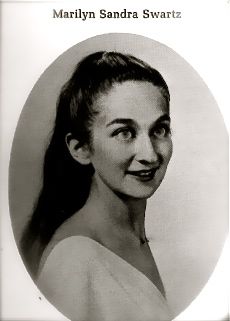
Marilyn Seven (born Marilyn Swartz in 1947) was an American playwright, actress, and arts organizer known for her prolific theater work, including plays like “Life Upon the Wicked Stage,” exploring faith and reality, and her activism, notably organizing support for Salman Rushdie; she passed away in 1997 from breast cancer.
Key Aspects of Her Life & Career:
please thank Jerry Morse for compiling this information
Vassar College Playwriting Award named in honor of Marilyn