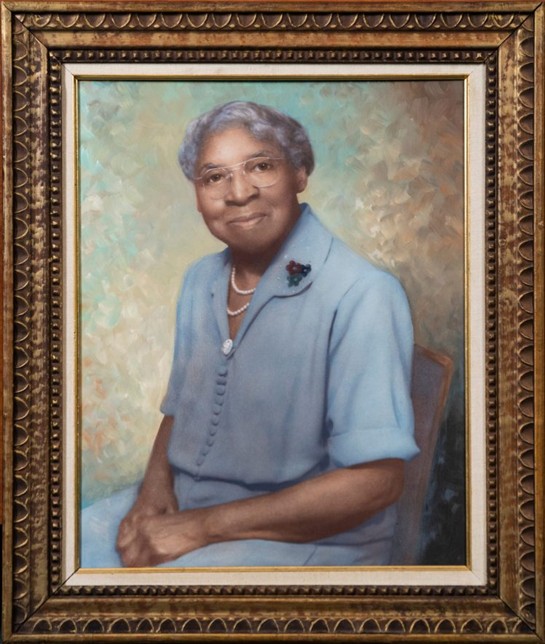
Research and writing by Kimberly Barros
submitted by Jerry Morse 1/31/2026
SARAH ELLA WILSON (1874-1955)
Sarah Ella Wilson was born in Worcester, the daughter of George M. and Elizabeth (Ray) Wilson, the oldest of six children. Her parents were newly freed slaves from North Carolina by Lucy and Sarah Chase, Worcester citizens who taught in the South. Sarah Wilson was named for Sarah Chase. “Chase treated her namesake as her protege and introduced her to ‘world an, literature and philosophy’ (in Wilson’s biography by Corrine Bostic. GO ONWARD AND UPWARD! Worcester; Commonwealth Press, 1974.)
Miss Wilson spent her early years in the Elliot Street area. Upon graduating from Worcester Normal School in 1894, she began teaching the first grade at the Belmont Street School in 1895. She herself had attended this school as a child. One of Worcester’s first black teachers, Miss Wilson was only absent from her post one day, and taught in the same room for forty-nine years, until 1944.
Active in social and civic organizations, Miss Wilson was a member and officer of the Northeastern Federation of Colored Women, an active member of the Bethel A.M.E. Church and the Leva.na Club for Teachers. A charter member of the Women’s Service Club of the Worcester YWCA, Miss Wilson has been honored by the club each year since 1955 through a scholarship established in her name at Worcester State College. She helped found the Home for the Colored and Aged and worked as an auditor, publicity agent and vice president during its lifespan.
Through the years, the black community of Massachusetts fought many battles to obtain education for people of color. It was not until April of 1855 that the State of Massachusetts allowed them to integrate their community into public schools in which any people of different backgrounds, religions or colors could be included.
Sara Ella Wilson was an exceptional educator, whose influence and values persisted and enriched Worcester’s history. Her legacy and actions brought an impact, having dedicated her life to making a difference in the lives of those in her community. Her commitment to education and advocacy for equal opportunities continues today.
Her story embraces her significant contributions to society as a result of her efforts, fights, empowerment, and beliefs. She spent her life working to educate and foster equality. She was a role model for the careers of the men and women who had the fortune to meet her as her teacher, helping them to become good citizens. The educational achievements and determination of Sarah Ella Willson allowed her to challenge gender norms, building the way for next generations of women of color.
Sarah Wilson was born on April 7, 1874, in Worcester, Massachusetts, into a legacy of paperhangers and whiteners. Her father George M. Wilson started the family business, while her mother, Mrs. Elizabeth Allen Wilson, worked as a laundress. Sara’s mother played a crucial role in shaping her religious beliefs and values, instilling in her a deep faith and love for God. Growing up in Worcester, Sara and her family settled in a predominantly black neighborhood, surrounded by supportive families such as the Early and Laws families.
Sara’s education and influences played a vital role in shaping her intellectual and spiritual development. One person who influenced her beliefs was Sarah Chase who was an activist and teacher who came to Worcester from Kansas to assist in the abolition of slavery. She and her sister Lucy came with Sarah’s parents as new free slaves, after the Emancipation Proclamation was declared. She was supported by her family, and surrounded by good friends and by mentors. Her parents moved all the way from the south to Worcester. They wanted a new start.
Since she was a child, she wanted to be a teacher. Sarah attended Belmont Community School and later graduated from Worcester English and Classical High School in 1887. She then enrolled at the State Normal School in 1890, where she graduated in January, 1894 in the thirty-fourth class. In October of 1894, she accepted the position of assistant teacher at Worcester State Normal School.
Throughout her apprenticeship, she gained the necessary knowledge of the profession and practical experience. One year before starting as an educator, she learned through observation and demonstrated excellence and professionalism.
After her graduation from Worcester Normal School, Sara became a teacher in May, 1895. She began teaching in the first grade of Belmont community school with an average salary of five hundred dollars per year, receiving fifty dollars less than her coworkers. She eventually became a permanent teacher in the city, at a school located just two blocks away from where she lived.
The educational methods of Sara Ella Wilson were shaped by integrity and wisdom. As an instructor, she was outgoing, imaginative and made her students feel comfortable and empowered at school. She was passionate about music, had outstanding ideas to support her community. She and her students used to sell newspapers at the entry of the school to raise funds to help their community.
Years after becoming a teacher, her mother died in November, 1955. Even so, she continued to extend her education and work to support the community participating in several associations of people of color and women, as one of the most regarded teachers in the community. Her dedication to education went far beyond the classroom, inspiring many generations to study regardless of their backgrounds, through her words, actions, and knowledge.
Sara dedicated herself to supporting causes and held leadership positions in several clubs and organizations. Miss Willson served as Secretary-Treasurer of the New England Branch of the Northeastern Federation of Women’s Clubs and an active member of the local Negro Woman’s Club Y.W.C.A. She was part of the Worcester Inter-Racial Council, the teacher’s organization Levana Club, a body of the National Association of Colored Women for twenty-five years, and chaired the Scholarship Committee of the NACW National Association of Colored Women. In addition, she was a member of the Worcester Women’s Progressive Club, the French Club, Phyllis Wealthy Club, vice-president of the Home for Aged Colored People and participant in several musical festivals. Her contributions and involvement in these organizations showcased her commitment to social progress.
Moreover, she assisted frequently with religious celebrations, supporting and donating as an active member of the Bethel African Methodist Episcopal Church, increasing the size of their association, and also teaching religion to kids on Sundays. She joined the Andrews Methodist community church with the closing of the Bethel A.M.E church.
Sarah taught at Belmont Community School for forty-nine years, with only one day off. As a woman of color in a predominantly white society, Miss Wilson faced numerous challenges throughout her life. She had to confront systemic discrimination and prejudice, both inside and outside of the educational system. In 1910, her father passed away, and she was obliged to sell his property and moved to a new house at 4 Pelham St, an area where blacks never lived before. At the time, there were some protests by the neighbors, claiming that her appearance was changing the neighborhood. Despite this, she continued living there with her sister Annie and her nephew Louis. She remained resilient, her determination and perseverance positioned her apart and made her stand out above others.
In her years of service, Sara manifested her values through actions as educator, officer, a church school teacher, superintendent, pianist, writer, and economic contributor to social causes. At that time, only a few women of color could achieve all of this. Even earlier than Sara, there was a young girl who broke the barriers and stereotypes in a classroom. She passed her entrance examinations protected by the principal of the school, through her bravery Worcester opened a door of opportunities for people of color in public schools.
In her lifetime, Sara understood the value of education, and what she could accomplish with it. She always tried to raise awareness, encouraged her neighbors, friends and young students to educate themselves, inspiring them to fulfill their potential and pursue a career.
During her years as an educator, Miss Willson persistently advocated against discrimination and equal opportunities. Sarah was a woman full of adventure, passionate about music, and lover of the French language. She liked to read books written by black writers that were recognized. She was an excellent example of change along with Frederick Douglass, Mary McLeod Bethune, and Elizabeth Carter Brooks.
Miss Willson never married. At the time, women educators were prohibited from marrying. Sarah retired in 1944. She assisted hundreds of her Black students, providing them motivation, counseling, and even financial aid. Her efforts aimed to empower them to become teachers, doctors, ministers, professionals, and successful individuals who contribute to society.
Past students of her and outstanding humans such as John S. Laws lived a life inspired by Mrs. Wilson beliefs and values. Like her, he succeeded despite racial segregation and eventually became the first black principal at Worcester public schools. He created a scholarship named in his honor by the program Dynamy John Laws. S. academy, which was created for him to create a path of higher education for diverse groups of students, following the beliefs of her mentor Sara Ella Wilson.
On December 10 of 1972, the Women’s Service club and the Belmont Community School committee and administration decided to contribute and name the library of the school in her honor Dr. John S. Law, speaking at the opening ceremony, described Sarah as “Her personality, her sympathy, her empathy, her love, her care, her poise, her alternative listening, her service, her generosity….”
Today, there is a foundation scholarship in honor of her name, for her tireless efforts to embrace support for women of color. In addition, the YWCA Woman’s Service Club established an annual scholarship in her name and a fund of one thousand dollars was established at Worcester State College in 1971, as a recognition for her impact on the institution.
Throughout her 49 years as an educator her activism furthered the progress of equal opportunities for the black community in Worcester. Sarah’s influence extended far beyond those who directly benefited during her years of education. Her commitment to support others left a big mark on the lives she touched. Through her Christian beliefs and values, the exemplary role to fulfill the idea between black liberation and women’s liberation was possible.
She serves as proof that everyone can have a profound impact, with kindness, honesty and dedication. Her history inspired new generations of young women and men, being one of the first black teachers who always advocated for the rights of her community, never remained silent, and knew how to speak up for the less privileged.