
Research and writing by Kimberly Barros
submitted by Jerry Morse 1/31/2026
JENNIE CORA CLOUGH Busby (1857-1928)
Women such as Jennie Cora Clough left an indelible mark on the city’s educational landscape. A female figure born in 1857 into one of Worcester’s most prominent African-American families, her grandfather, Peter Rich, was born as a slave in Lancaster, Massachusetts, but eventually settled in Worcester and became one of only three men of color to own properties in the city before the Civil War in 1861.
She was the eighth of nine children born into a family with middle class opportunities. Her parents were Francis A. Clough and Harriet Clough. Francis ran a popular barber shop that attracted mostly white customers, being one of the first black barbers in Worcester and one of the first men of color to sit on a jury in the United States. He knew all the prestigious people in the city, and everyone in town had seen his shop, which provided Jennie the necessary connections that she needed to pursue an education.
Her brother, Benjamin, became Worcester’s first African-American postman and her sister Inez Clough, was a singer, dancer, and actress who helped to open doors for blacks to perform on “legitimate” stages in theater. Her other sister Anna was an entrepreneur who focused on the hairdressing of white customers. By the time Jennie turned thirteen, her mother died of tuberculosis at the age of 51, leaving her father a widower at 54 years old.
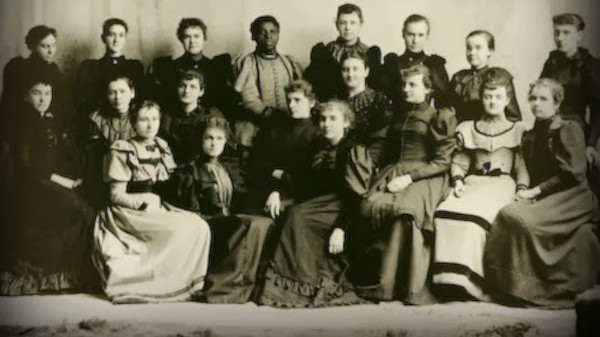
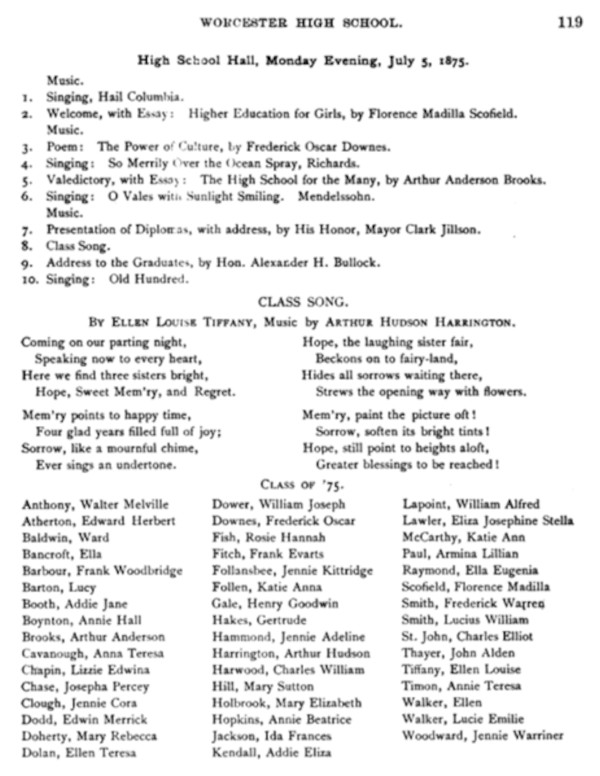
It is believed Jennie became the first black woman to attend a Worcester normal school and later the first certified teacher registered in Worcester public school system. Since she was young, Jennie showed ambition and dedication to her academic life. She attended the prestigious Worcester Classical and English High School, considered the best school in the city. In 1867, Jennie was the only black student in Miss Wentworth Providence Street Secondary School. There is evidence from a picture of Jennie being the only black girl among seven white girls in their high school in the records of the English Classical School. In 1869, she was listed on the honor roll. In 1870 and from 1872 to 1875, she maintained perfect attendance. Jennie had no difficulty fitting in with her classmates. Eventually, she graduated in 1875 with honors.
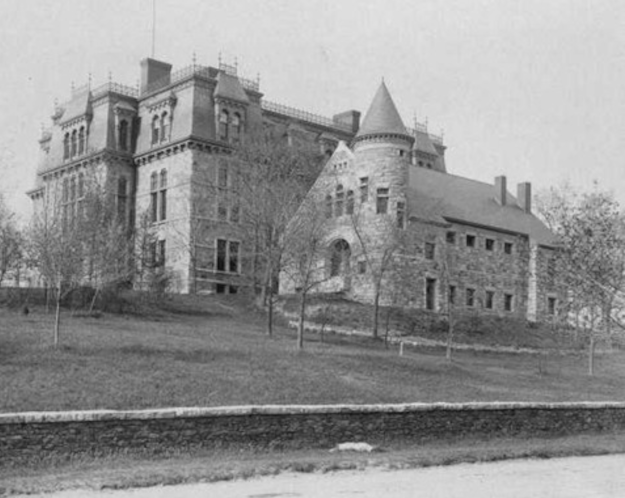
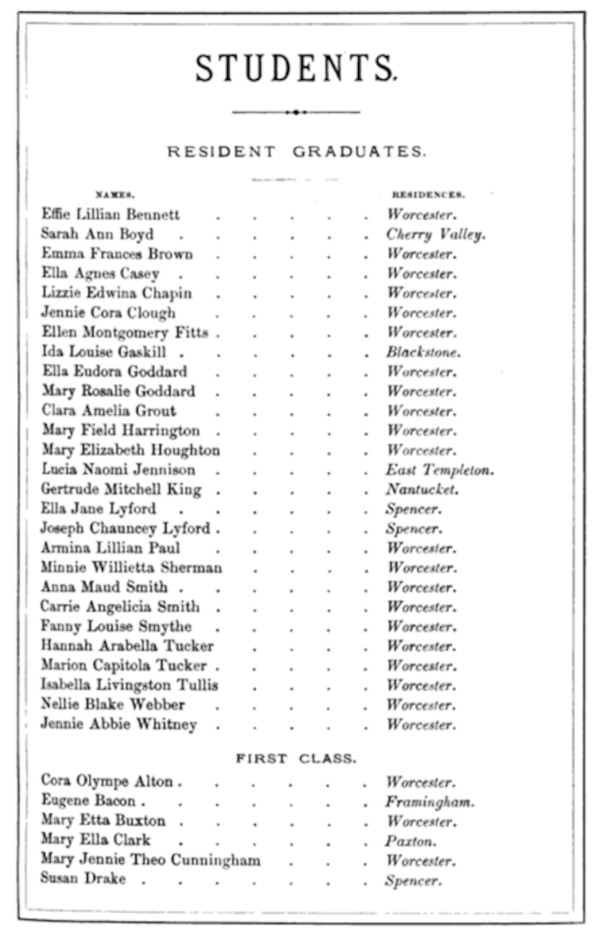
After her high school graduation, Jennie received a recommendation from her tutor Ellis Peterson that enabled her to enroll in Worcester Normal School (Worcester State College), but the recommendation wasn’t enough, she also had to apply for the acceptance and to take a series of tests, including a writing examination and interview. Twenty-two students, including Jennie, took the test, only one boy and fifteen girls were admitted. Jennie was admitted with an entrance score of 57.2.
A quote from her journal claimed: “This morning we are pleased to find that fifteen trees had been placed on either side of the walk, although they are quite small, the effect is pleasant and we may safety hope great things for these little trees, for if they produce such a great thing in their infancy, what will, or rather what won’t in the years to come when they spread their branches over the broad expanse of Eastern Park!” (May 19, 1876). This entry showed her commitment to spreading education and inclusion toward the next generations
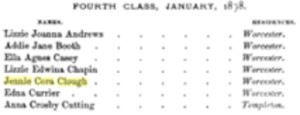
In April, 1877 Jennie did her apprenticeship teaching for three weeks at Sycamore Street and in September 1877 at Ledge Street schools. She graduated from Worcester Normal School scored 8 points higher than the average standard 60.9. As a member of the fourth class, she finished her studies and received her diploma in 1878.
At the time, there were limited employment opportunities for women of any racial origin. If Jennie didn’t marry after college, her options were to work as a teacher or as a domestic servant. In the 1880 census, Jennie was listed as one of the only 8 African American professionals in Worcester. She wasn’t hired until 3 years later when she secured a position in an overcrowded school.
There is no record available to determine how many African American students attended Worcester public schools. In 1846, an unknown black girl challenged the educational panorama by being allowed to attend a school. After that nothing changed, until 1857 when Jennie started her education, opening opportunities for students of color to have access and formally attend all the Worcester Schools.
According to public school records in 1881, she began teaching at the Thomas Street Primary School, which was the Worcester School for Colored Children until the mid-1850s. However, most of the children she taught were Irish, American and just a few percent represented people of color. She continued teaching at the Thomas Street Primary school for eight years with a salary of five hundred dollars per year, while white woman teachers earned a salary of five hundred fifty dollars. In June of 1886, the Thomas Street school held a reunion and Jennie wrote a song for the occasion. The chorus reads: “Welcome, schoolmates! Welcome teachers! Welcome o’er and o’er! We’ll hail with joy each happy day. That brings us here once more”.
Unfortunately, women educators were not allowed to marry. Jennie’s teaching career ended when she married George Alfred Busby on October 18, of 1893. She was courted by her husband for seven years and postponed the date of her engagement to lengthen her career as a teacher. She had two sons in 1895 and 1897. George Busby graduated from the combined English and Commerce High in 1915, and Alan Busby was the first African American to attend the University of Connecticut and earn a bachelor’s degree with honors in 1918.
Jennie Cora Clough is not only the first African American woman to become a schoolteacher in her city. She also challenged the system of school teachers in a racially mixed society. She broke a barrier and showed that women of color of any race could function and achieve as white women did in her classrooms. Her family status, personal traits and ambitions and the connections that his father made were the elements that helped to gain respect for their family, allowing Jennie to have the opportunity of study at a high school and eventually graduate. Jennie Clough died May 11, 1928, aged 71. She grew up surrounded by persons who inspire her to complete her education.
Locally and nationally, she was part of an elite group of black professionals as a teacher for 15 years. Jennie Cora Clough had a significant impact on Worcester’s school system, transforming the lives of women of color, leading educational reforms, motivating activists such as Sara Willson to expand opportunities and amplify the voices of their communities.
She started a new era of possibilities. In her footsteps, her roots were expanded and women of all cultures could have an education. She inspires all of us to become and build a more inclusive world. Miss Clough proved that no matter what our history is, we always can make a change if we make the effort and are willing to confront our challenges.
The spread of African American educators in Worcester public schools continues to expand thanks to her actions.