Our next Zoom Reunion
Monday
June 8, 2026
7:00 PM
email: benbachrach@gmail.com if you want the Zoom login information.
At this session we will discuss closing this website.

Our next Zoom Reunion
Monday
June 8, 2026
7:00 PM
email: benbachrach@gmail.com if you want the Zoom login information.
At this session we will discuss closing this website.
Football and an award ceremony.
Let benbachrach@gmail.com know if you have any information to share about this.
02/07/2026
Information about the Classical High School building added 2/07/2026 with items submitted by Jerry Morse.
Remarkable Classmates added 1/22/2026 with items submitted by Jerry Morse
Remarkable Non-Classmates created 1/22/2026 with items submitted by Jerry Morse
Material from an 1892 book prepared by Jerry Morse has been converted to an eBook. Click here to view.
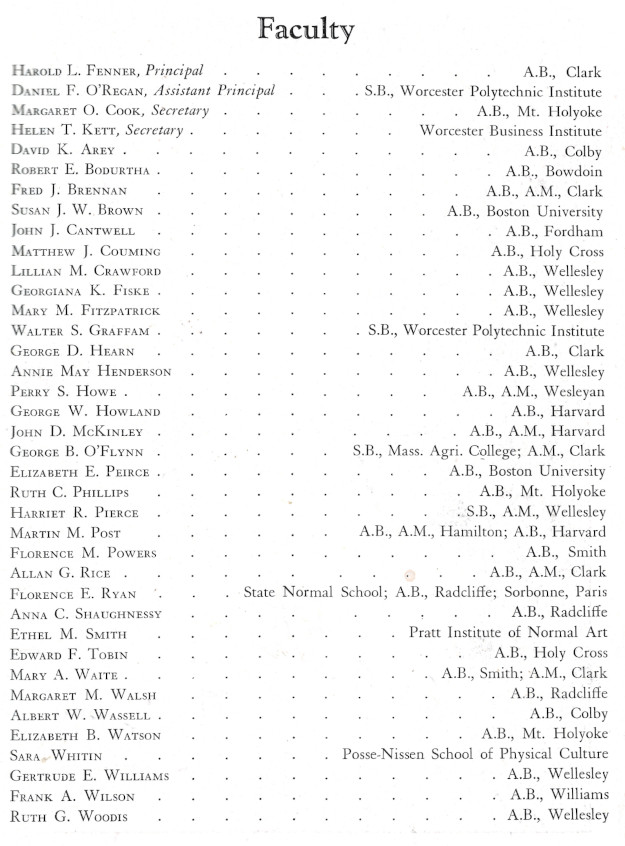
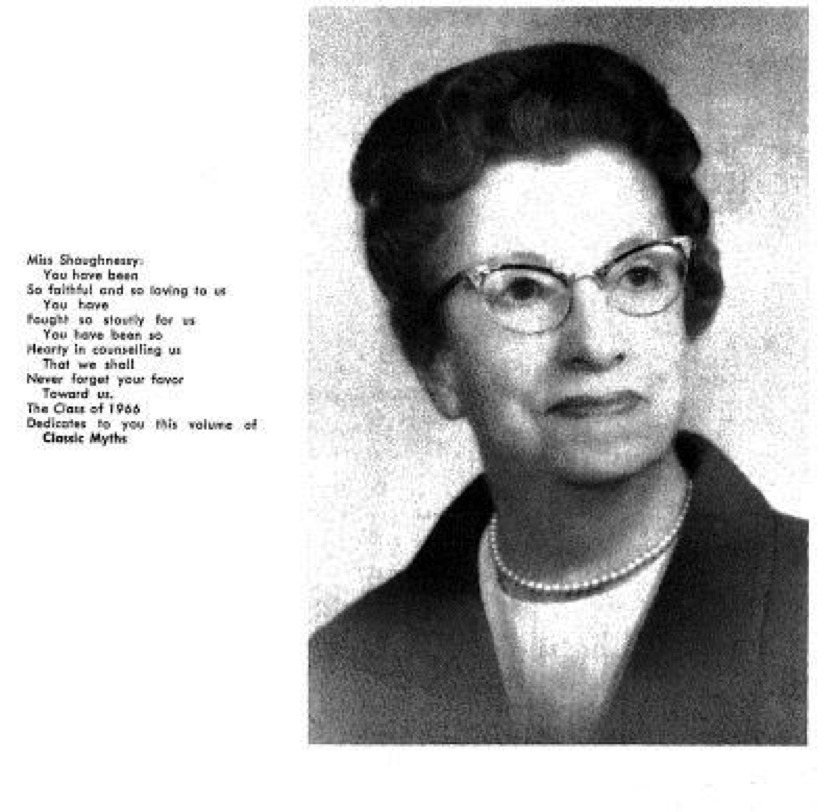
An article about Anna Shaughnessy suggested by Jerry Morse was added December 25, 2025.
Jerry Morse continues to contribute historical items:
click here to view
We now have a page you can post your biography and view what others have posted. See the menu item BIOGRAPHIES
Let us know if you want items like this added to our website as they become available by emailing info@classical65.com.
submitted by Jerry Morse – 2/7/2026
The building that housed Classical from 1914 to 1966 was placed on the National Registry of Historic Places in 1980.
Being on the National Register of Historic Places (NRHP) means a property is officially recognized by the federal government as worthy of preservation due to its significance in American history, architecture, archaeology, engineering, or culture.
click on the underlined link to show an enlarged view
Administered by the National Park Service (NPS), listing provides a formal recognition but is largely honorary for private owners, emphasizing documentation and planning rather than strict regulation.
Key Implications of Listing
Eligibility Criteria
To be listed, a property must generally be at least 50 years old and retain its historic integrity (looking much as it did in the past). It must meet at least one of four criteria:
National vs. Local Designation
A common misconception is that National Register status is the same as local historic designation.
Research and writing by Kimberly Barros
submitted by Jerry Morse 1/31/2026
In the 1890s only a thousand Blacks lived in Worcester, MA. The small population of African American people made it hard for their community to succeed.
In this paper, Barros highlights the remarkable lives of women who have made significant contributions by challenging gender and racial systems. Understanding their stories is crucial, as we continue to share information to raise awareness. We are able to see and perceive who these women were, why we are standing here today, and how we can continue moving forward for the sake of future generations.
This document helps us to understand what were the sacrifices that women such as Sara Ella Wilson and Jennie Cora Clough had to make, to be seen as equally respected among other women.
Since the beginning of the civil rights movement, women have been fighting to collect signs and speak on the front for Worcester’s history, working to support the rights of people of color, mothers, immigrants, and Native Americans. They established clubs and organizations from Christian, Baptist, and Catholic denominations with the backing of their husbands or through funds collected within their communities.
Even before associations were formed, African American women organized their own groups and started to support families, neighborhoods, and businesses in their community. Women’s suffrage and black rights were of importance to them.
The following are some of the clubs that contribute to the development of Women’s rights.
The YWCA formed in October of 1898. It started with a group of black women with hard work and dedication. They decided to focus their intentions on supporting aged colored men and women who needed a place to live. Their goal was to secure cooperation between all the members, mutual improvement, and the establishment of a Day Nursery and home for needy indigent Women of color.
The Women’s progressive club, in conjunction with the A.M.E. Zion churches were created by women to support and benefit the black members of their community. At this time, black neighborhoods faced more segregation and disenfranchisement because of their race and sex. Because of these factors, they created a service for their community. It became a tradition in which black women’s organizations united themselves for social service.
The NAACP (Home-aged Colored Women) was dedicated to collect funds for African American women that were passing through situations of poverty and economic conflicts at home, partially for indigent women outside the home. Their ways to make money were getting funds from outside of membership as donations, fundraising, and cash. They also planned annual dinners and concerts that attracted different people that could afford to enjoy the night.
These groups were sustained by fundraising committees of black church ladies, organizing, running, and benefiting social causes. Their goals were “to end abuses of power, to supplant corrupt power with reformed versions of such traditional institutions of schools, charities, medical clinics, and to apply scientific principles and efficient management to economic, social and political institutions” Wanting to be taken seriously, they worked and never stopped despite segregation discrimination, Civil War, WW2, the Great Depression, and the struggle for civil rights.
What were the risks that they took and what were the consequences of their actions?
These women, among others, dedicated their time and efforts to combat racial segregation, promote civil rights, and work towards a more inclusive and equal society in Worcester before, during, and beyond the reconstruction era. Their contributions helped shape the city’s history for progress. Their efforts have laid the foundation for the improvement that we continue today and their work should be acknowledged by understanding the struggles, sacrifices, and risks these women faced.
Sara and Jennie worked hard to make a change in society. We recognize their achievements and contributions to building a more inclusive and egalitarian future.
continued as biographies of:
Jerry Morse suggested that we add this to our website, a 2015 article about Miss Shaughnessy that is posted at:
http://theworcesterjournal.com/2015/04/03/2015324anna-shaughnessy-maker-of-writers/
There were other novelists not mentioned in the article that were influenced by Miss Shaughnessy. Noah Gordon (Noah Mandell’s cousin) had at least 5 novels published. The first was published during our senior year at Classical. If you know of others, please notify benbachrach@gmail.com.
Anna Shaughnessy, Maker of Writers
by Edmund Schofield
Worcester Journal Editor’s Note: As a rule, we don’t publish work by older, established writers, but we make an exception with this piece by the late Edmund Schofield since it tells the story of an English teacher who had the rare ability both to instruct and inspire. Anna Shaugnessy mentored young writers who went on to great success–Stanley Kunitz, MIlton Meltzer, Charles Olson, and Nicholas Gage. Every young writer should be lucky enough to come across an Anna Shaughnessy.
We learned about this piece through Joan Gage, who featured it in her blog, A Rolling Crone. We are grateful to be able to publish this edited version of the essay in the Journal.
There is a further twist to the tale. Schofield’s original essay described three writers mentored by Miss Shaugnessy, and only at the last minute did he discover that Nicholas Gage, Joan’s husband and an accomplished author whose books include “Eleni,” which was made into a successful movie of the same name, and “A Place For Us,” had also been a student of hers. Gage’s thoughts on his old high school teacher are in a postscript to the essay.
continued at:
from Jerry Morse
Every time I watch the University of Oklahoma play football, I wonder where they got the music for their fight song Boomer Sooner. The music happens to be identical to the music for our much beloved Salitube. So I looked it up.
“Boomer Sooner” is the fight song for the University of Oklahoma (OU). The lyrics were written in 1905 by Arthur M. Alden, an OU student and son of a local jeweler in Norman. The tune is taken from “Boola Boola“, the fight song of Yale University (which was itself borrowed from an 1898 song called “La Hoola Boola” by Robert Allen (Bob) Cole and Billy Johnson.
While Boola Boola is till much loved at Yale, it is no longer the official fight song.
Jerry
please thank Jerry Morse for providing the content for this page.
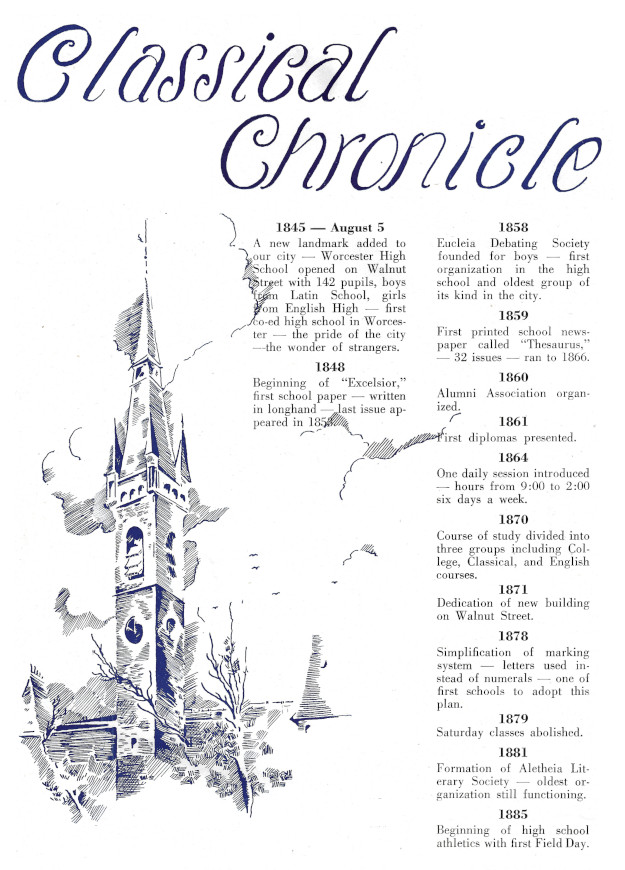
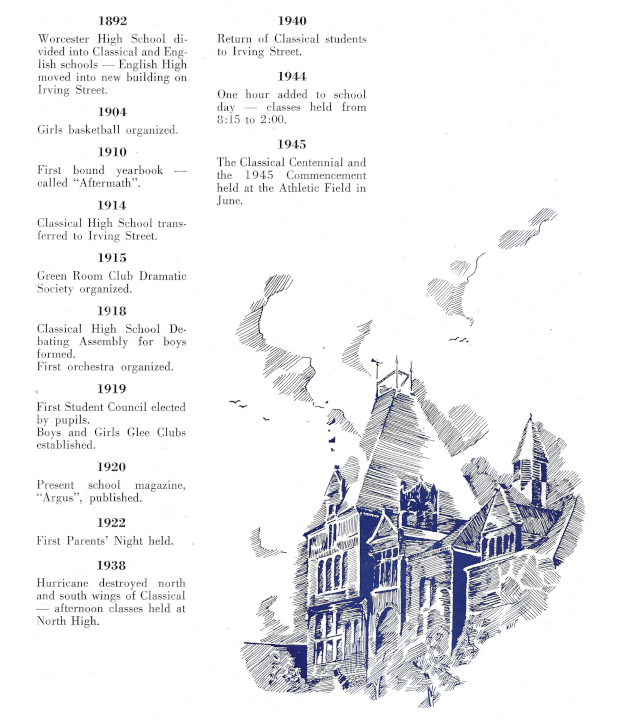
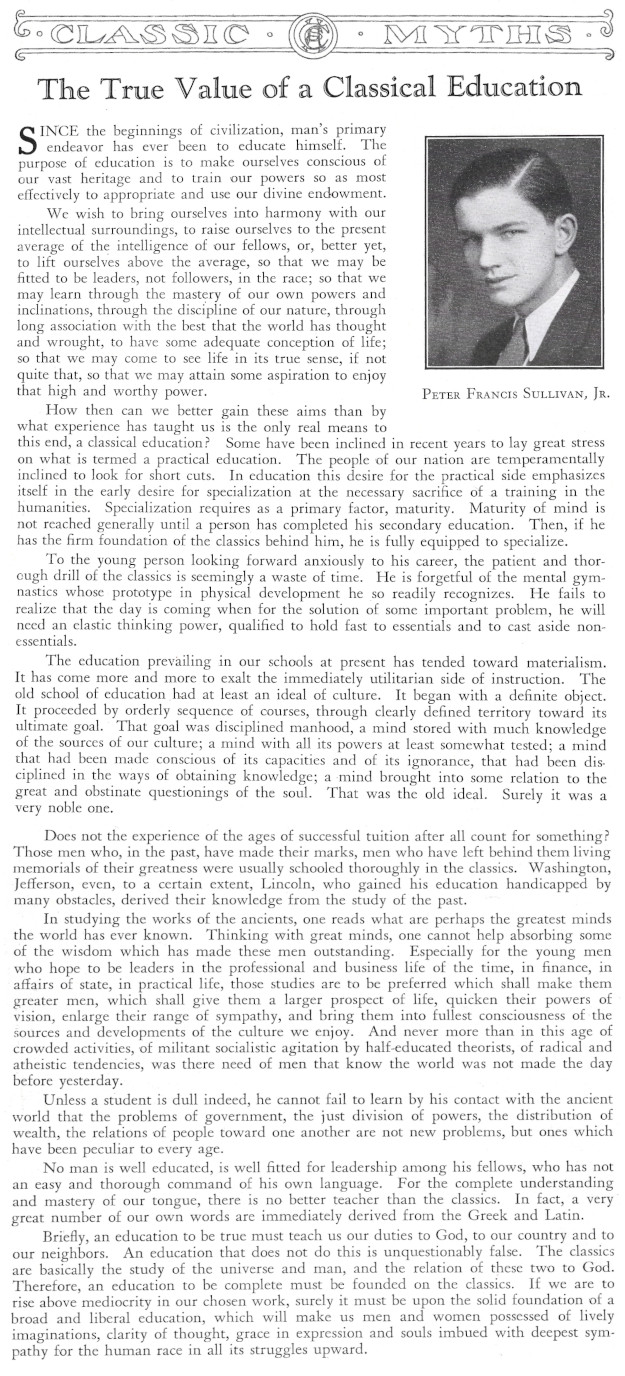
The above images were extracted from the following pdf files
An essay by a member of the class of 1930 describes the original mission, ideals and objectives of our alma mater.
Submitted by Jerry Morse